
Lorem ipsum dolor sit amet, consectet eiusmod tempor incididunt ut labore e rem ipsum dolor sit amet. sum dolor sit amet, consectet eiusmod.
| Mon - Fri: | 8:00 am - 8:00 pm |
| Saturday: | 9:00 am - 6:00 pm |
| Sunday: | 9:00 am - 6:00 pm |






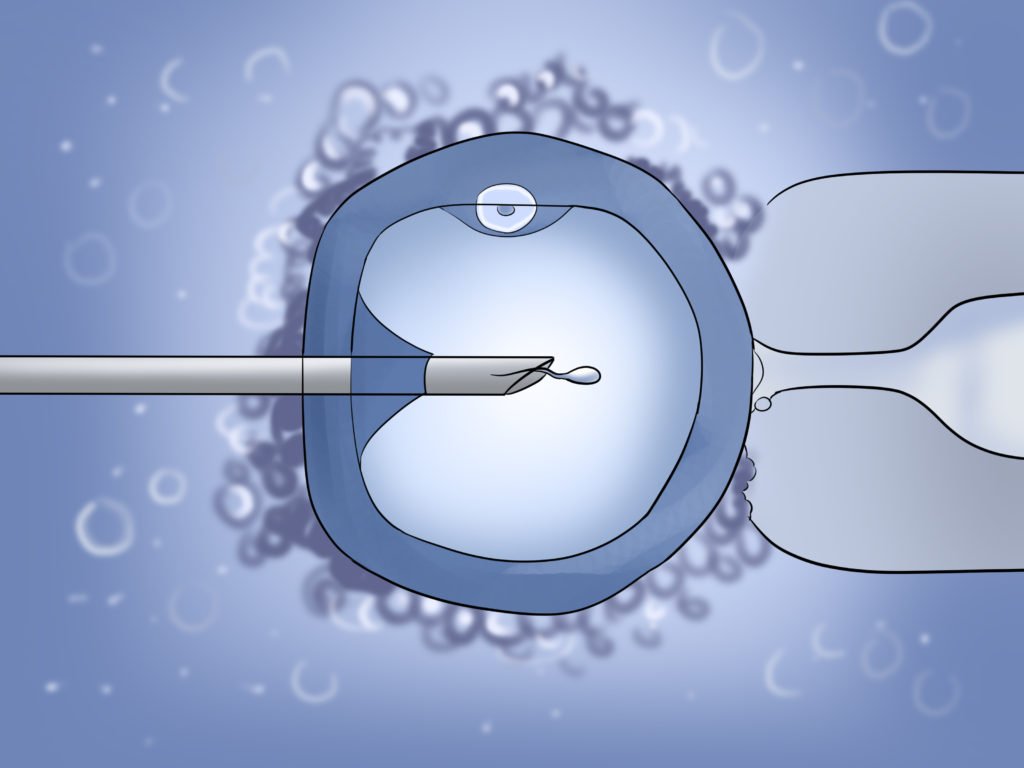
The problem for many couples is not the egg but the natural potential of the sperm to fertilize the egg. That’s exactly the problem that a very specialized and accurate lab technique called Intracytoplasmic Sperm Injection (ICSI) was devised to solve. ICSI is performed during an IVF cycle and has improved outcomes for couples with male factor infertility offering the chance to become biological parents that may not have been possible otherwise.
ICSI is performed in strict laboratory conditions by our team of embryologists, who use high precision micro-manipulation equipment to achieve the highest potential fertilization outcome for each embryo produced.
What is ICSI ?
ICSI is another option for standard IVF fertilization. Standard IVF includes placing thousands of sperm along with an egg in a culture dish and allowing natural fertilization to occur. The embryologist uses ultra-fine glass needles and high magnification microscopes to pick out a single healthy sperm and injects it directly into the cytoplasm of a mature egg.
ICSI can overcome the natural barrier to allow fertilization where some quality or quantity would otherwise make this very difficult or impossible. There are many hurdles sperm must pass to reach and penetrate an egg.
ICSI is usually indicated for male factor infertility. There are several clinical circumstances for which ICSI is indicated:
Indications for Male Infertility
Other Clinical Indications
In traditional IVF, the lady is induced to create many mature eggs. The woman undergoes a short operation performed under anesthesia guided by ultrasound to extract the eggs.
A sperm sample is collected (or thawed or surgically removed) and analyzed at the andrology lab to ensure the sperm cell with the best morphology and motility is used for injection.
All eggs collected are checked under the microscope to confirm they are mature (MII stage) as only mature eggs may be used for ICSI.
The embryologist fixes one sperm of choice and then, with a unique micromanipulation device and a very fine glass needle, injects it into the cytoplasm of each mature egg cell.
Eggs are screened for normal fertilization and then transferred to Embryo Culture roughly 16-18 hours post-injection.
The fertilized eggs (embryos) are incubated and studied for the following few days as stated in conventional IVF and the healthiest embryo is chosen for uterine transfer.
Increased Fertilization Rates
ICSI places a single sperm straight into the egg, achieving (reliably) high fertilization rates regardless of sperm concentration or motility.
Compatible with sperm retrieved surgically
Sperm obtained directly from the testicle can still be used to accomplish fertilization via ICSI in males with azoospermia.
Beat Serious Male Infertility
Even when sperm counts are very low, the quality of the sperm is poor or where conventional IVF would probably fail, fertilization is possible.
Works Together with Other Techniques
ICSI is typically used in conjunction with pre-implantation genetic testing and blastocyst culture for couples in need of accurate fertilization and screening of embryos.
ICSI is only for the fertilization step of IVF and does not influence ovarian response, egg quality or implantation chances. Factors for success still include uterine receptivity, egg quality and the overall reproductive health of both partners. Your fertility doctor will review your medical history, previous treatment history and semen analysis to see if ICSI is right for your cycle.
ICSI has been successfully performed throughout the world for decades and is considered to be a safe and well-established procedure when carried out by skilled personnel.
No. ICSI is indicated only when there are particular clinical indications and semen analysis. Your doctor will advise you whether standard IVF or ICSI is more suitable for your situation.
There is no special procedure for the lady involved with ICSI, other than the usual egg retrieval which is carried out under anesthesia.
No procedure can guarantee fertilization and pregnancy however ICSI can dramatically increase fertilization rates in cases of male factor infertility as against standard IVF.
Your journey towards parenthood can begin with a simple conversation. Schedule a consultation with Jeevan Jyoti IVF Centre to understand your fertility concerns and explore the treatment options available for you.