
Lorem ipsum dolor sit amet, consectet eiusmod tempor incididunt ut labore e rem ipsum dolor sit amet. sum dolor sit amet, consectet eiusmod.
| Mon - Fri: | 8:00 am - 8:00 pm |
| Saturday: | 9:00 am - 6:00 pm |
| Sunday: | 9:00 am - 6:00 pm |






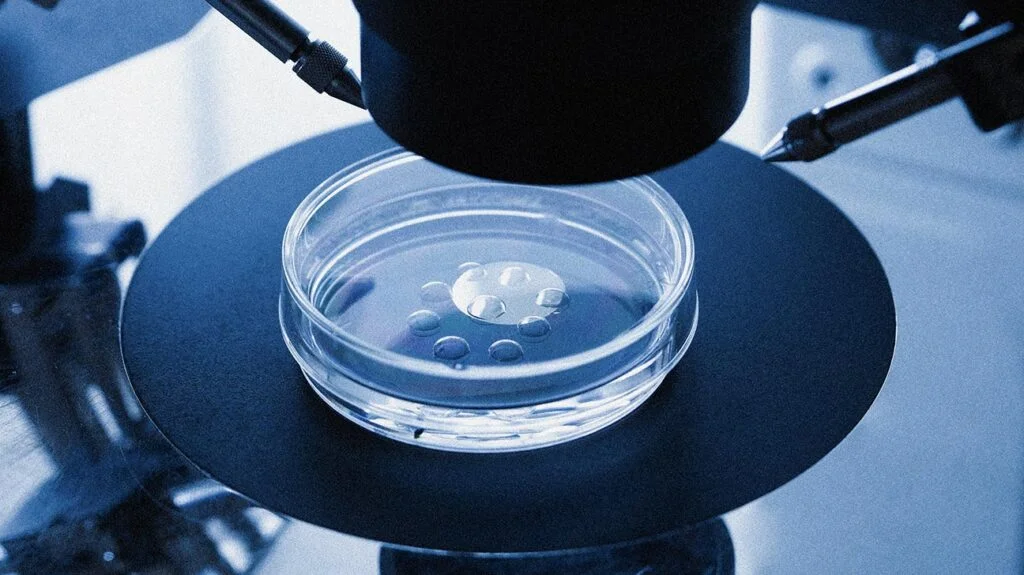
Every couple dreams of having a joyful, complete family and the delight of being parents. But now it has gotten quite hard to conceive naturally because of several medical issues. In such cases, In Vitro Fertilization (IVF) is one of the most advanced and successful ways to enable thousands of couples worldwide to fulfill their desire of parenting.
What is IVF?
In Vitro Fertilization is the most successful method of medical treatment for couples that are attempting to or planning to have a child. This is a process where a woman’s egg and a man’s sperm are fertilized outside of the body in a controlled lab setting. After this the developing embryo is watched for a few days as it grows, and the healthiest embryo is put into the woman’s uterus, where it starts to implant and develop into a pregnancy.
IVF is often recommended when a couple’s specific diagnosis indicates that it is the easiest and most successful approach to conceive, or after simpler reproductive therapies have failed.
IVF is useful for couples to overcome a wide variety of fertility difficulties including:
Female Infertility Factors
Causes of Male Infertility
Other Fertility Issues
IVF treatment begins with a detailed consultation. Your doctor will ask about your medical history and hormones, take some tests with your spouse to check your health and make a treatment plan that’s right for you.
The lady will be given fertility medicines for 8-12 days, carefully monitored to induce the release of more than one mature egg from the ovaries (rather than just one egg in a normal cycle). During this phase, monitoring of follicles is done by regular blood tests and ultrasound.
The eggs are then harvested when they are ripe and this is a quick, minimally invasive operation that is done under sedation so that the mother experiences little or no discomfort.
The following day, a sample of the semen is obtained and sent to the lab for analysis. The eggs and sperm are then mixed together in a laboratory, in controlled settings, to allow fertilization to occur.
The fertilized eggs are kept alive in the laboratory for a period of days, and the embryologist examines their growth. The specialist chooses a (or few) embryo(s) that are growing nicely.
This easy process, called gentle transfer, involves the careful placement of the selected embryo into the uterus, without the need for anesthetic. After this a pregnancy test is done around two weeks later to confirm the outcome.
Verified Advanced Solution
IVF is one of the most researched and most extensively used fertility procedures, bringing hope even if other treatments have not been successful for you.
Higher Control Process
Since fertilization occurs in a lab, an embryologist may closely examine the quality of the embryos and choose the one that will work best for your transfer.
Path to Parenthood
It has helped millions of couples throughout the world, including those with difficult fertility diagnoses, go on to have healthy children.
Adaptability
IVF can be combined with other methods such as ICSI, blastocyst culture or pre-implantation genetic testing in some situations to improve results.
Individualized protocols
Every couple’s fertility journey is different. The therapy regimens are individualized according to age, diagnosis, and prior treatment history.
The quality of the woman’s egg, the spouse’s sperm, her age, her ovarian reserve, the condition of the uterus, and the underlying cause of her infertility all affect the effectiveness of a successful IVF treatment. Pregnancy can be guaranteed by any treatment, but the odds of success are significantly increased when a customised protocol is paired with skilled care.
You won’t ever feel alone on this path of your life because our team is constantly monitoring, providing emotional support, and ensuring transparent communication.
An IVF cycle is from the commencement of ovarian stimulation through to embryo transfer. Usually it takes about 4 to 6 weeks.
Most steps are not very uncomfortable. Giri is performed under anesthesia. Embryo transfer is a minor, painless surgery.
The number varies from person to person; some may get pregnant in the first try, while others may need more than one try. Our doctor will guide you according to your response to the treatment. In vitro fertilization can be used with other fertility treatments. Yeah. Your diagnosis will determine this. IVF is commonly paired with ICSI, laser-assisted hatching, blastocyst culture, or pre-implantation genetic testing to improve outcomes.
Your journey towards parenthood can begin with a simple conversation. Schedule a consultation with Jeevan Jyoti IVF Centre to understand your fertility concerns and explore the treatment options available for you.