
Lorem ipsum dolor sit amet, consectet eiusmod tempor incididunt ut labore e rem ipsum dolor sit amet. sum dolor sit amet, consectet eiusmod.
| Mon - Fri: | 8:00 am - 8:00 pm |
| Saturday: | 9:00 am - 6:00 pm |
| Sunday: | 9:00 am - 6:00 pm |






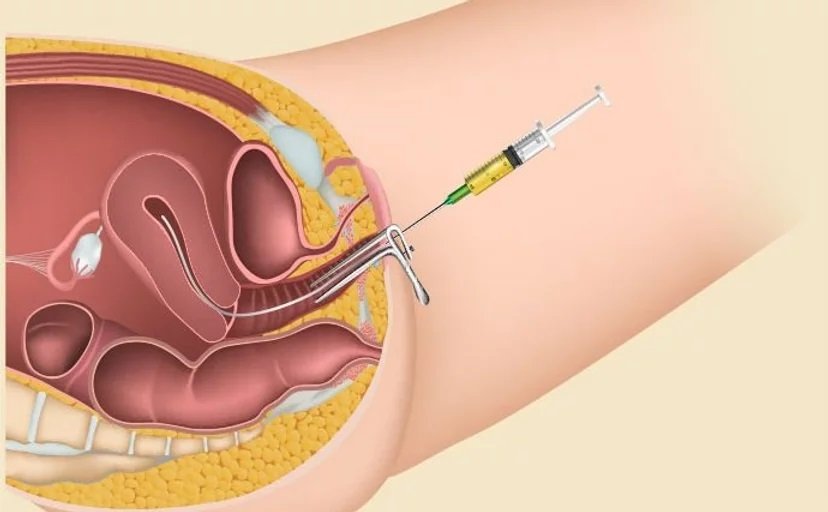
Intrauterine insemination (IUI) is an assisted reproductive technology (ART) in which sperm is processed and inserted into the uterus during ovulation.
IUI tries to improve the possibility of sperm meeting egg by transferring a concentrated sample of sperm closer to the egg, and removing some of the obstacles sperm need to pass so that they can get to the egg.
IUI is one of the options for couples with some types of infertility such as unexplained infertility, fertility problems related to ovulation or some male-factor fertility problems.
The fertility doctors at Jeevan Jyoti IVF Center will first analyze both spouses before choosing IUI and will construct the treatment strategy based on your medical history and fertility issues as well as your reproductive goals.
Not sure if IUI is right for you? Book an appointment with our fertility doctor!
Intrauterine Insemination, commonly called IUI, is a fertility treatment designed to bring sperm closer to the egg at the time when ovulation is expected.
During an IUI cycle, sperm is collected from the male partner or, when medically appropriate, a donor sample may be used. The semen sample undergoes laboratory processing to separate and concentrate the sperm with better movement.
The prepared sperm are then introduced directly into the uterus using a thin catheter.
Unlike IVF, fertilization in IUI takes place inside the woman’s body. The egg and sperm are not combined in a laboratory to create an embryo.
This makes IUI a relatively simple and less invasive assisted reproductive treatment compared with IVF, although it is not appropriate for every fertility situation.
IUI does this by decreasing the distance the sperm has to swim to reach the egg.
When sperm are deposited in the vagina, they usually have to transit via the cervix and uterus to reach the fallopian tubes, where fertilization ordinarily occurs.
During IUI:
Sperm Collection → Sperm Preparation → Ovulation Monitoring → Insemination → Fertilization → Implantation
After semen collection the sperm is prepared, the ovulation of the sow is observed and the semen is introduced into the sow by insemination, fertilization and finally implantation.
The prepared sperm is deposited into the uterus at about the time of ovulation so that motile sperm have a more direct route to the fallopian tubes.
IUI does not fertilize the egg directly. Fertilization still has to occur spontaneously within the reproductive system.
IUI can be performed with or without fertility medications.
Natural-cycle IUI uses the woman’s own natural ovulation.
The fertility team monitors the cycle and times insemination around ovulation.
This approach may be considered when a woman ovulates regularly and there is no need for ovarian stimulation.
In stimulated IUI, fertility medications are used to encourage the development of follicles.
The aim is to increase the chance that an egg will be available for fertilization.
However, stimulating the ovaries can increase the possibility of multiple pregnancy, particularly if several follicles develop.
For this reason, careful monitoring is an important part of stimulated IUI treatment.
IUI has many advantages for the proper patient. Less invasive than IVF But unlike IVF, IUI doesn’t require eggs to be retrieved or fertilized in a lab.
Easier Treatment Process
The insemination procedure is fairly quick and generally does not require anesthetic.
Positions Sperm near the Egg
A shorter distance for sperm to travel to the uterus . Prepared sperm are directly deposited in the uterus .
Can be used with any type of ovulation therapy
In some circumstances, women with certain forms of ovulation problems can be treated with IUI using fertility medications and monitoring.
May be a first treatment
IUI may be used in certain couples before more complex and expensive Assisted Reproductive Technologies (ART) such as IVF.
There is no magic number of IUI cycles that is right for everyone. Some couples may get pregnant the first round of therapy, while others may have to try numerous times. If you haven’t become pregnant after a few well-timed days, your fertility doctor may want to assess the situation and discuss if switching to IVF or continuing IUI could improve your chances of success. The decision is a matter of:
Although both are assisted reproductive treatments, IUI and IVF work differently.
IUI | IVF |
Prepared sperm is placed directly into the uterus | Eggs are retrieved and fertilized in a laboratory |
Fertilization occurs inside the body | Fertilization occurs in the laboratory |
Does not require egg retrieval | Requires egg retrieval |
Generally simpler and less invasive | More involved treatment |
Usually lower treatment cost per cycle | Generally more expensive per cycle |
Suitable only for selected fertility conditions | Can be used for a broader range of fertility problems |
Embryos are not created in the laboratory | Embryos are created and developed in the laboratory |
Carefully timed treatment. Personalized fertility care.
At Jeevan Jyoti IVF Centre, IUI is not approached as a one-size-fits-all procedure.
Our fertility team evaluates the factors affecting your ability to conceive before recommending IUI.
Detailed Fertility Evaluation
We assess both partners to understand whether IUI is appropriate for your fertility situation.
Personalized Treatment Protocol
Your IUI cycle can be planned around your natural ovulation or, when appropriate, fertility medication.
Ovulation Monitoring
Ultrasound monitoring helps track follicular development and determine the appropriate timing for insemination.
Laboratory Sperm Preparation
The semen sample is processed to prepare a concentrated sample of appropriately motile sperm for insemination.
Precise Timing
Timing is an important part of IUI. The insemination is coordinated with ovulation according to your individual treatment protocol.
Complete Fertility Guidance
Our team supports you through evaluation, treatment, post-procedure instructions and pregnancy testing.
No, fertilization happens naturally in the reproductive tract during IUI. IVF is the process of collecting eggs and fertilizing them in a laboratory, then transferring an embryo into the uterus.
In the laboratory, the semen is treated to properly concentrate motile sperm. The final volume of insemination and sperm concentration will vary depending upon the sample and laboratory methodology.
No, IUI is particularly effective for particular reproductive problems. In the case of clogged tubes, severe male-factor infertility, some kinds of endometriosis or the presence of considerably diminished ovarian reserve, other therapeutic methods may be more suited.
In some cases of minor male factor infertility, IUI can be an option. However, if there is a noticeable decrease in sperm count or mobility, IVF with ICSI may be a preferable choice.
Your journey towards parenthood can begin with a simple conversation. Schedule a consultation with Jeevan Jyoti IVF Centre to understand your fertility concerns and explore the treatment options available for you.